
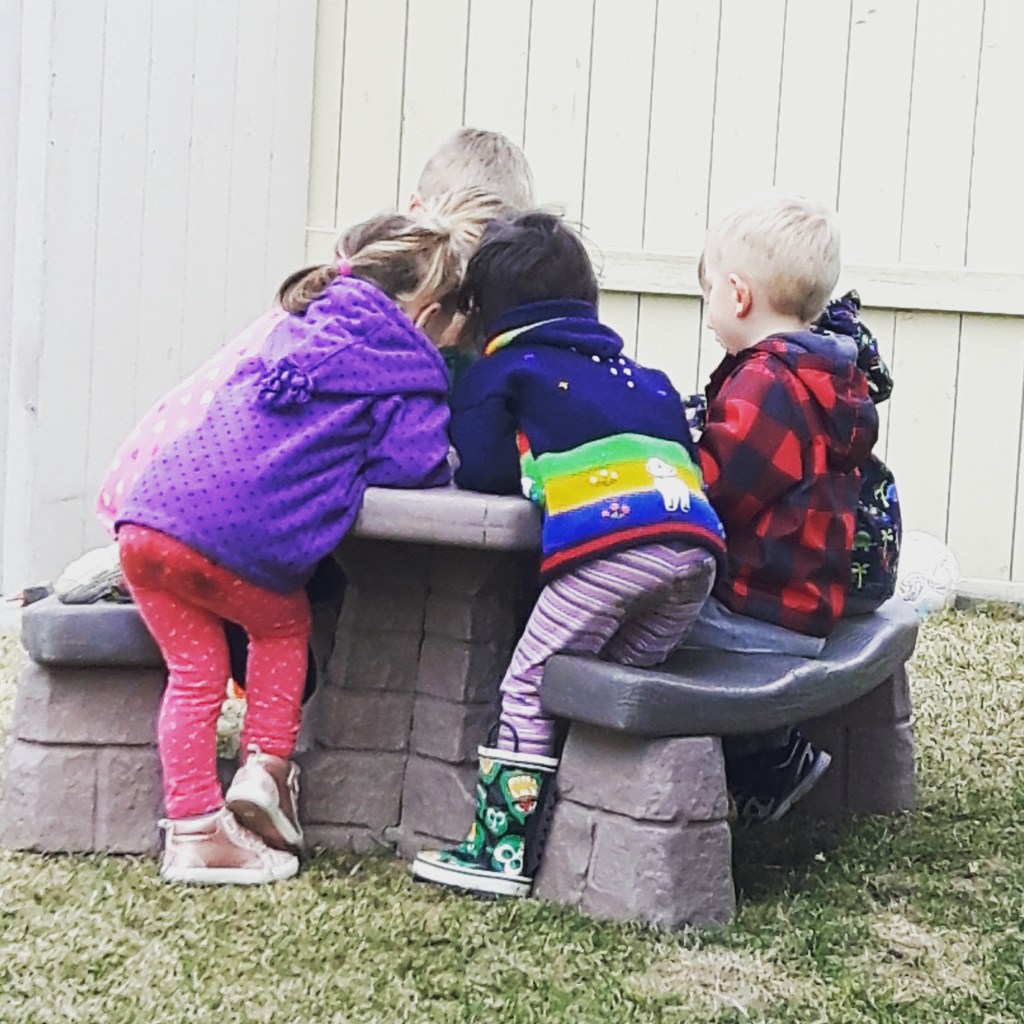
The story that eventually became my book began several years ago while I was running a family daycare and spending my days listening to children talk about their lives. Over time, I noticed that many of their stories weren’t about extraordinary events, they were about change, big feelings, and moments when things felt uncertain. New siblings, moves, family stress, illness, or simply growing up. These moments of uncertainty were still oftentimes portrayed as exciting and new to the children who experienced them. Children really are the ultimate optimists! In times of uncertainty or hardship, often the community shines through, we should take a moment to acknowledge that receiving help doesn’t need to be shunned or avoided, and in itself should be reason enough to celebrate the benefits of belonging to a community that puts kindness and caring at the forefront.
At the same time, I was completing my Early Childhood Care and Education studies, where one of our class projects challenged us to identify a topic that was real, relevant to children’s lives, and not well explored in existing children’s literature. I kept coming back to the same gap I was seeing every day: we talk to children about kindness, but we rarely talk honestly about what happens when families don’t have enough, and how community support fits into that reality. A notable part of the work as early childhood professionals focused on connecting families to resources.
But it wasn’t just some families; in fact, most families faced vulnerabilities at some time or another, this was especially noticeable in 2013 when Calgary experienced a flood that paralysed much of the city and closed daycares in flooded areas, preventing parents and caregivers from going to work. One of our families was stuck with outgrown snow gear when snow unusually fell in September, before they were able to purchase new winter gear. We pulled together donations from families who had extra winter gear. Or when connecting families with a Good Food Box full of local fruit and vegetables which helps create a little extra when everyone is home from school in the summer.
Most families do their best to meet basic needs like food, shelter, and safety. But life happens. When resources fall short, emotionally, financially, or practically, it’s often community that makes the difference. A neighbour notices. A friend checks in, someone offers support without being asked.
That idea stayed with me.
The book grew from both lived experience and intentional learning. A desire to create a story that reflected real life without fear or judgment. I wanted children to understand that needing help is part of being human, and that kindness isn’t just a feeling, it’s something we do. Everyone needs help sometimes, and everyone has the ability to help others in small, meaningful ways.
Since publishing, I’ve had the privilege of visiting elementary schools across Vancouver Island, usually one, maybe two a month. During these visits, we talk about how stories are made, but we also talk about needs, kindness, and noticing when someone might be struggling. What continues to surprise me is how naturally compassionate children are around these ideas when they are given space to talk about them.
I was born on Vancouver Island, spent time away, and returned home five years ago. My experiences have quietly shaped both my work and the values that guide it. Community isn’t an abstract concept on the Island, nor was it in Calgary, it’s something we experience daily, in schools, neighbourhoods, and shared spaces.
This book is just one small way I would like to contribute to a culture of community, caring and kindness. Stories don’t fix everything, but they can open conversations, and oftentimes that’s where change begins.
If you’re an educator or part of a school community interested in local author visits, I’m always happy to connect.
Written by Nicole Croft
Author of There Are Some Things Love Can’t Buy
Nicole and Danielle Books
 Nicole and Danielle Books
Please take a moment to leave a review.